Adventures in Vibe Coding
An experience in vibe coding my way to a useful web app, and thoughts and advice around what that means.
For all the (likely) excessive hype about AI right now, one use case is looking truly compelling: vibe coding, especially in a no/low-code environment. Vibe coding is helpfully described by Wikipedia as:
A chatbot-based approach to creating software where the developer describes a project or task to a large language model (LLM), which generates code based on the prompt.
"No/Low-Code" refers to development environments where the user needs very little coding knowledge in order to create something useful. All told, the promise of these solutions is to dramatically lower the complexity and cost bar for creating and deploying functional software. A couple prime examples gaining traction today are Lovable and Replit.
So in the spirit of learning, I set out to do some serious vibe-coding, and in the process see if I could produce something actually useful. My tools of choice was Lovable, selected in part as it's wildly popular and in part as it is considered one of the easiest platforms to use for those with minimal development skills, being almost entirely prompt-driven.
The result?
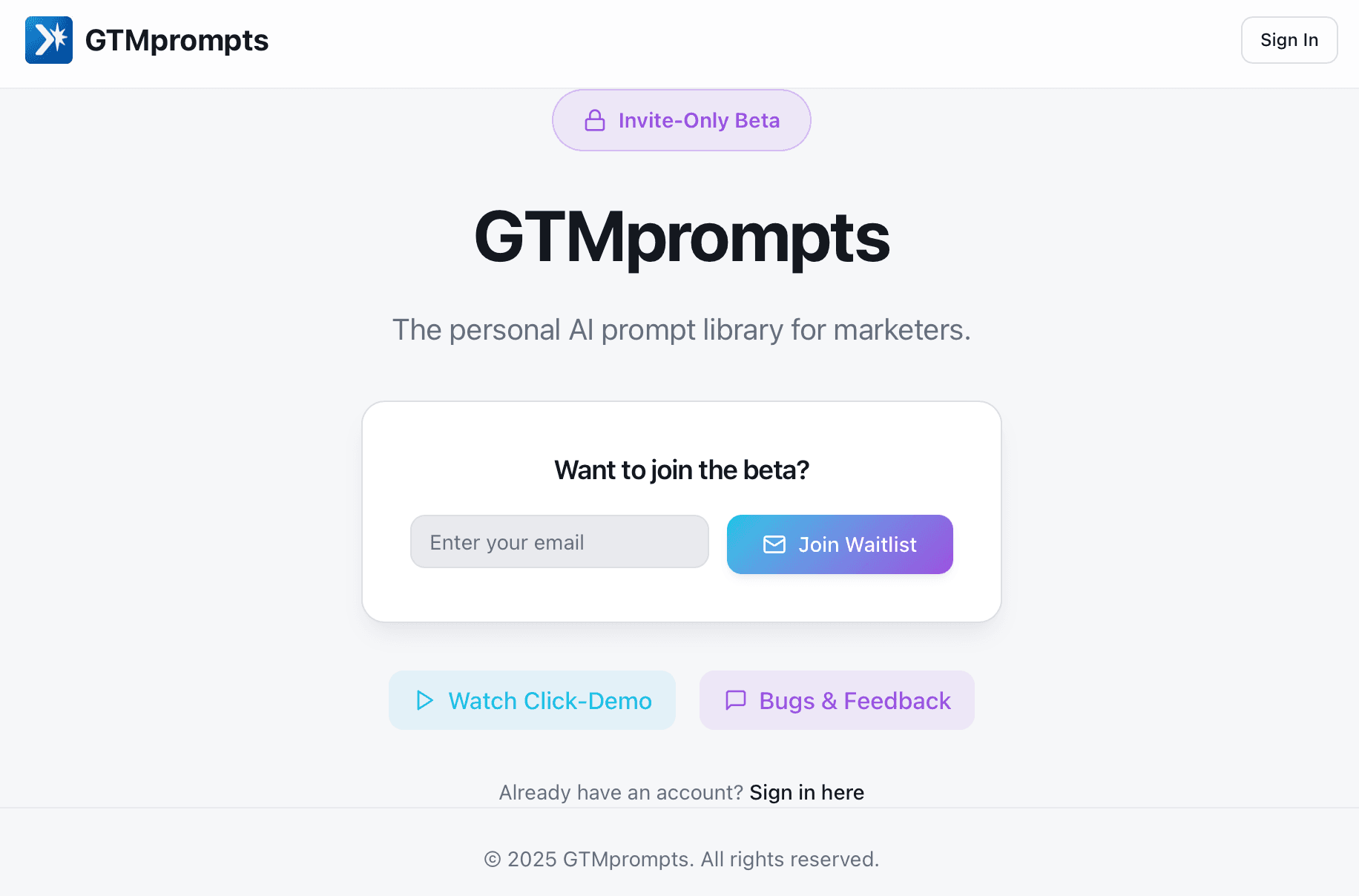
GTMprompts, a "personal AI prompt library for marketers." Currently in private beta, and if the feedback is positive, something I just might release it publicly in the coming weeks. [EDIT: It lived a useful, if brief life and and since been superceded by much more advanced vide-coding projects.]
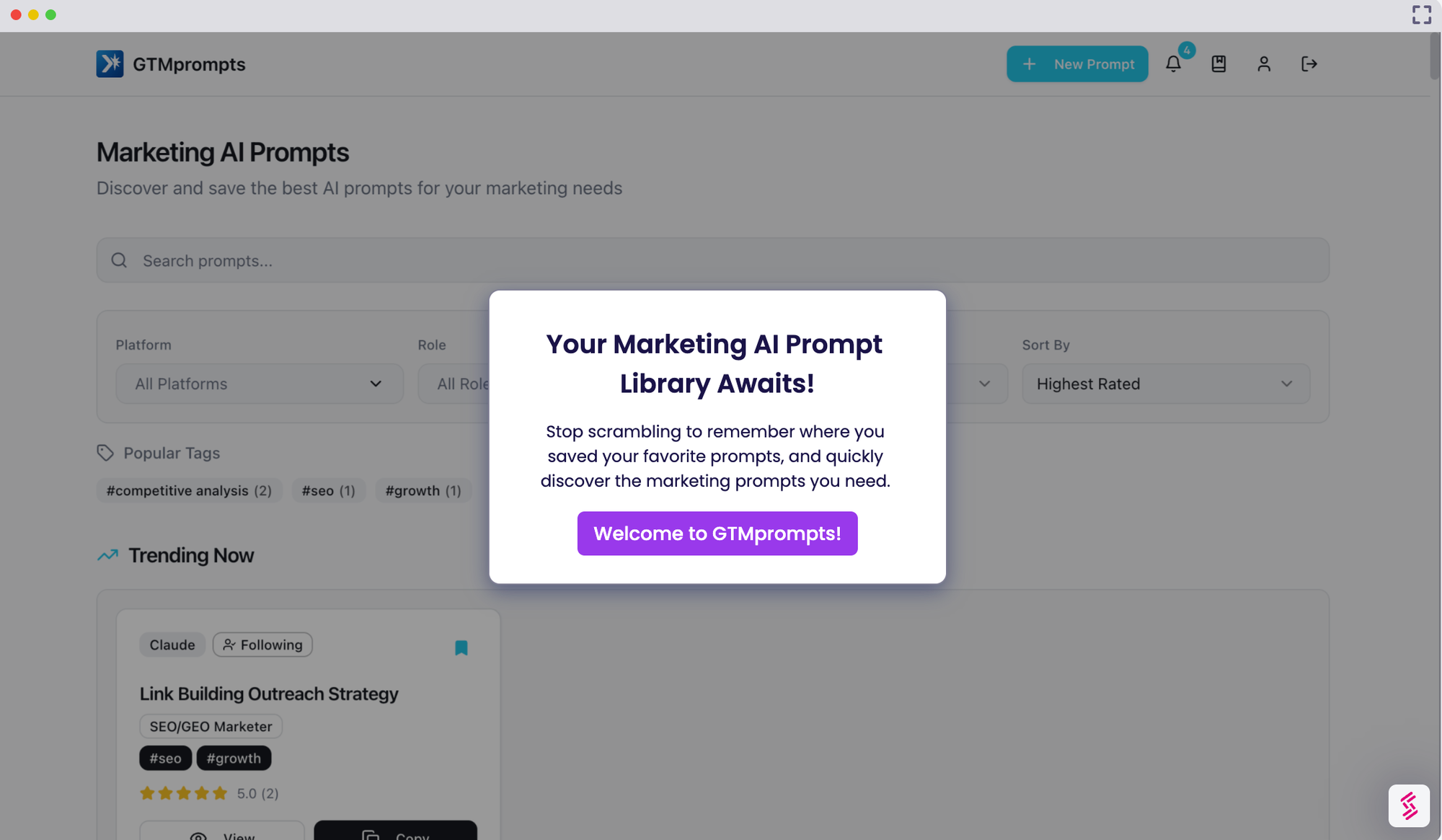
It's a fully functional personal AI prompt library targeted at marketers, built on Lovable, hosted on Lovable Cloud and GitHub, complete with an official Chrome Extension, 100+ pre-seeded prompts in a global library, and AI-assisted prompt generation built right in. It even works as a Progressive Web App (PWA), meaning you can add it to your mobile or desktop so it works pretty much like a proper app. It's even connected to Stripe for eventual subscription management if/when it comes out of beta (the demo above was built for free in Storylane, an amazing app I found on ProductHunt).
All built in about a week and a half, maybe 10 hours total of effort, and for a Loveble cost of perhaps $200. I roughed out the idea on my own, then asked Claude to explore the concept, and when I felt it was in a good spot, to create a full prompt suitable for Lovable, including technical, UI, and feature recommendations. I dropped the prompt into Lovable and then spent the rest of the time responding to Lovable AI suggestions - for features, bug fixes, security concerns, and so on.
Why did I pick this idea?
To solve a friction point I personally deal with, and based on some anecdotal conversations know other marketers wrestle with as well: I use multiple AI tools, have my go-to set of AI prompts for them, but I save those scattered around in OneNote or desktop files, and I'm constantly encountering new marketing prompts all over the web and in newsletters I want to save for later use. The chaos was getting real.
GTMprompts solves for that, and over the past week it's become a part of my go to toolset. Is it useful for others? I have no idea, but that is part of the power of vibe coding.
What did I learn?
- Vibe coding is an incredibly powerful new tool, even for non-developers. I dreamed up an idea, fleshed it out a bit with an AI tool, and had a basically functional app up and running in less than an hour. It did take a bit longer to refine, add some extra features I wanted, and QA - in short get it ready for a potentially wider audience - but the ability to take an idea and turn it into a functional web app with zero practical development experience and in almost no time is simply amazing. Will this replace enterprise-grade apps anytime soon? I would question that, but there are countless smaller points of friction this kind of solution could be invaluable for.
- The marginal cost of simple app development is approaching zero. $200 (well, plus buying a fancy .ai domain from GoDaddy for another $50) and a few hours was all it took to get this up and running. Absent coding skills, before vibe coding it likely would have cost me thousands and weeks of time to hire a freelance developer. As these tools improve, it's easy to see a world where instead of researching and licensing off-the-shelf solutions for many lower-level tasks, marketers and others will simply spin up their own web app. Especially if its for a non-mission critical task and internal use only.
- Lovable-specific learnings:
- Start with Claude/ChatGPT to develop and refine the prompt, before diving in to Lovable. The prompt I eventually copied out of Claude was detailed enough that Lovable was able to create a largely functional app with the UI and features I wanted in just a few minutes, without burning dev credits going back and forth, feature by feature - spend that time in Claude, and use it as a brainstorming tool before you get down to Lovable prompt generation. The more specific you are from the outset, the better Lovable performs. Better clarity = better magic, in effect.
- Lovable's AI prompts are powerful, addicting, and frankly a fantastic product-led growth (PLG) feature. Once you have a basic app, Lovable will continually suggest new features, functionality and UI. Some is invaluable - features I hadn't thought of but added something key to the experience, or security considerations I wouldn't have known to think of. But it's very easy to get caught up in the AI prompts and land in a world of feature-bloat and cool but unecessary UI ("why yes, I would LOVE a small fade and shimmer effect on that button! Thanks Lovable!"). As you pay for Lovable in "credits", and every prompt chews up more, you can quickly find yourself paying up to buy more credits if you're not careful.
- Don't forget to constantly QA - Just because the UI is there doesn't mean Lovable actually made it work. I found this to be true repeatedly. I would ask Lovable add a button ("edit prompt") and then go back later to find that while yes, the button exists and looks great, Lovable didn't put any code behind it. Get used to reminding Lovable to check/validate things work as intended. And just because it's easy to get things built, this doesn't absolve you from standard QA. Every tweak might break something elsewhere, so go back and triple-check that things work as expected.
- Coding skills aren't needed, but product and logic skills are. You need to think through how the app should work, how both users and admins will need and want to use it, and how all the features and data play into those experiences. It's not just "build me an AI prompt library!" and walk away, it's thinking through the model as a product owner.
- Ship fast and flawed. Honestly, I should have shipped this app out to some friends for testing and feedback a while back, but instead I got caught up in making it as clean and shiny as I wanted it to eventually be. Net result - I like it, and it works for me, but I have zero user feedback on if I created something that anyone else finds valuable. The whole idea of vibe coding is it enables you to build prototypes fast and cheap in order to rapidly validate concepts and functionality. I failed that, but had fun in the process at least.
All in all it was a powerful learning experience. I'm posting GTMprompts as a private beta, and curious about user feedback, and have already started playing with a couple additional ideas - small friction points that a bit of simple code might help address. And that is the main point of this particular application of AI, where it helps ease and accelerate a previously complex, costly or intimidating process in order to generate something useful (if imperfect).